by Lorato | Nov 20, 2025 | Accolades and Achievements, All News, SMU Media, Student Media
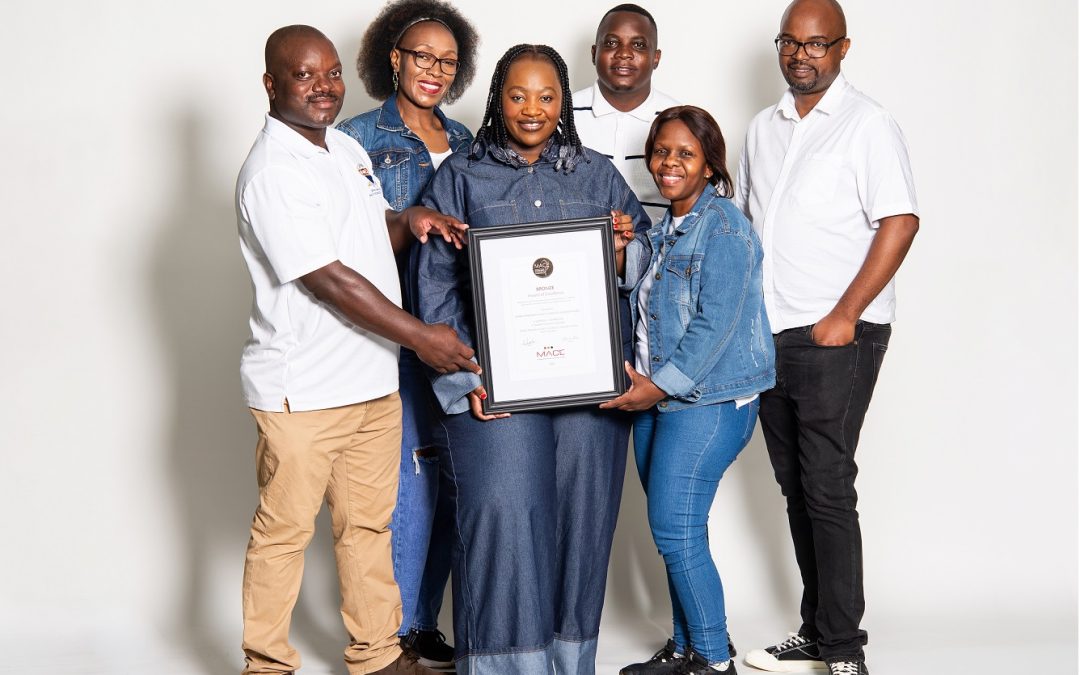
In a year defined by strategic reinvention and unprecedented momentum, Sefako Makgatho Health Sciences University (SMU) has entered the national spotlight with its first-ever accolade from the prestigious Marketing, Advancement and Communication in Education (MACE) Excellence Awards. The recognition marks not only a milestone for the Communications and Public Relations Unit but also a defining moment in the university’s evolving institutional identity.
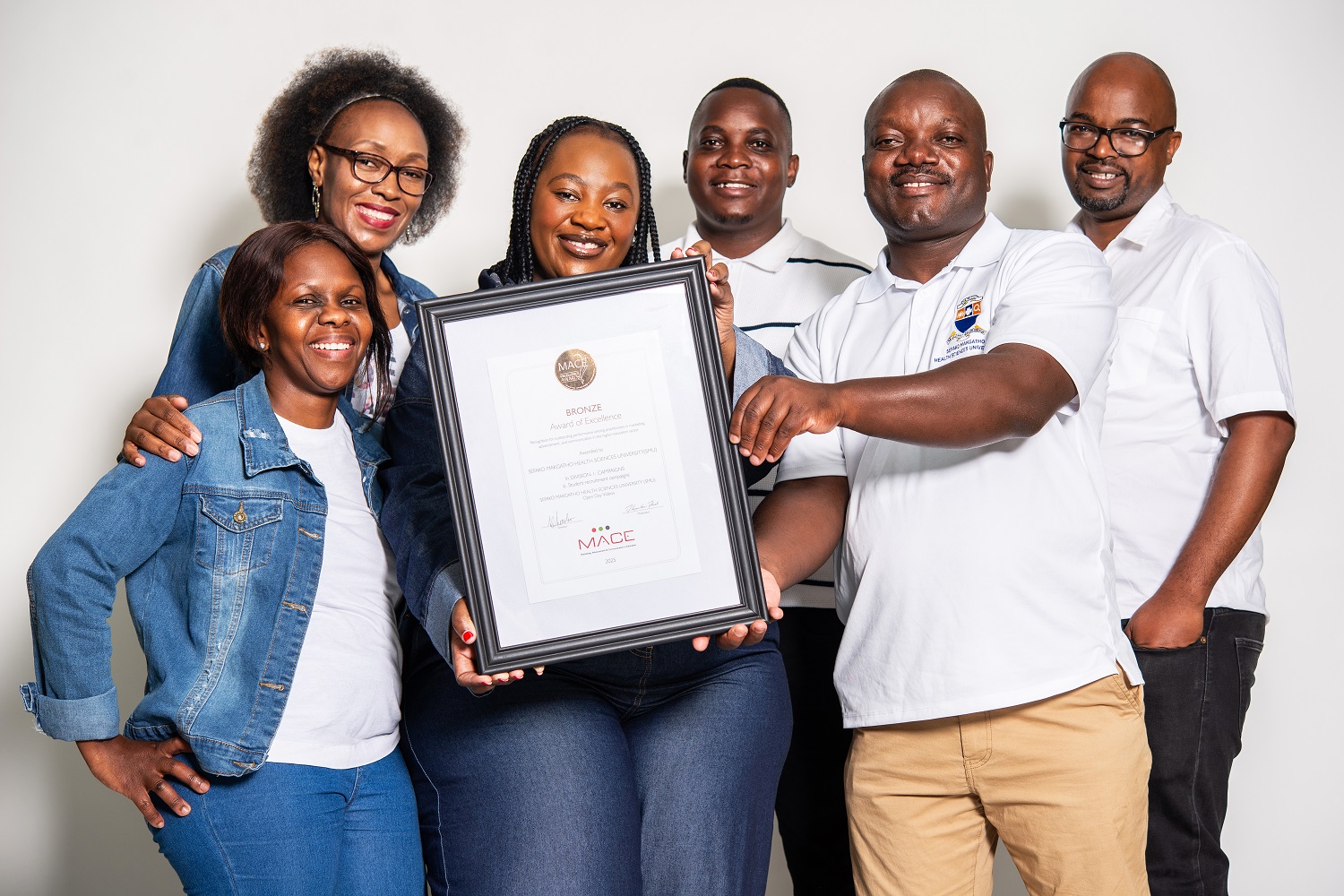 MACE, the sector’s leading professional body for higher-education communicators across Southern Africa, celebrates innovation, strategic excellence and impactful storytelling. Its awards are widely regarded as the sector’s highest honour, recognising institutions that demonstrate distinction in brand positioning, engagement and advancement. For SMU, competing among 26 universities, this achievement signals a shift in the university’s competitive posture and brand maturity.
This recognition emerges from a year in which the Communications and Public Relations Unit underwent a remarkable transformation, reshaped through refined processes, elevated outputs and a clarified strategic purpose. Since assuming leadership in October 2024, Tshimangadzo Mphaphuli, Manager: Communications and Public Relations, has guided a deliberate repositioning of the unit anchored in rigorous storytelling, institutional clarity and competitive brand visibility. It has been, in many ways, a re-awakening of SMU’s voice.
Reflecting on the achievement, Mphaphuli says: “When I assumed duty, I knew that SMU possessed an extraordinary story—rich, rigorous and rooted in purpose. My vision has always been to craft a brand presence that mirrors the calibre of our academic excellence, our people and our impact. This award signals that our voice is now resonating beyond our borders, and we are only getting started.”
Under her leadership, the unit delivered some of the institution’s most sophisticated communication outputs to date. Institutional publications were revitalised into rich, editorially strong, visually compelling assets that reflected SMU’s academic prestige and social impact. Digital communication experienced its strongest year yet, with engagement rising by nearly 50%, follower growth accelerating significantly, and search engine optimisation positioning SMU among South Africa’s most visible health-sciences brands. These gains, achieved through disciplined strategy and a commitment to excellence, created the foundation for the national recognition the university celebrates today.
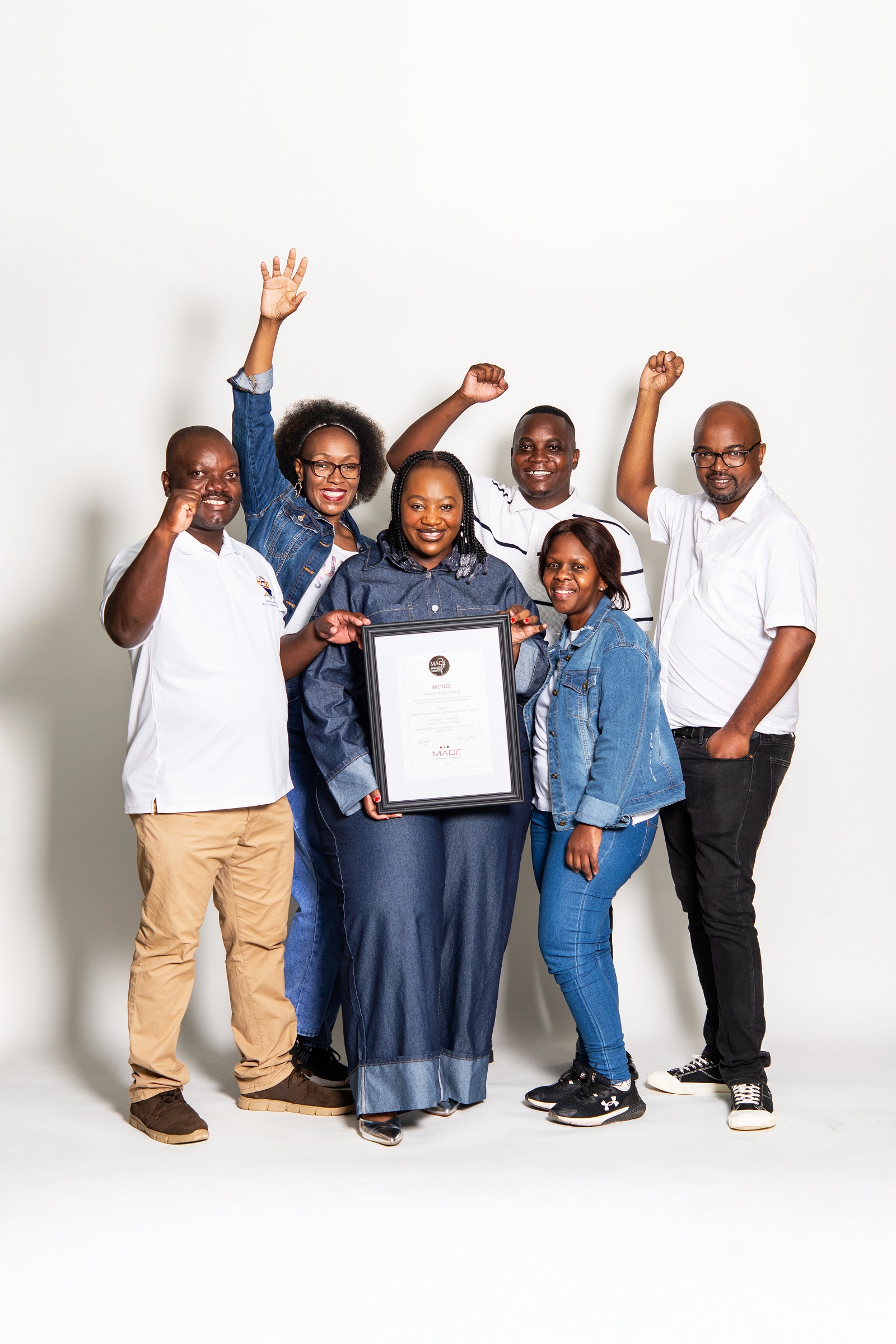 But the triumph belongs equally to the team whose collective dedication sharpened SMU’s communications edge. Public Relations Officer Tumelo Moila notes that the award reflects a relentless pursuit of agility. “We had to operate at the speed of the sector,” he explains. “Our work demanded creativity, instinct and a willingness to constantly stretch ourselves. This isn’t just a win, it’s a reflection of our readiness to compete nationally.”
Team member, Public Relations Officer, Dimakatso Modise, echoes this sentiment, emphasising the team’s evolution. “We became a unit that embraces complexity,” he says. “Our landscape shifts daily, and we’ve learned to shift with it—always with excellence at the centre of everything we produce.”
The excellence was not confined to written communication alone. The university’s visual language underwent a noticeable elevation under the creative direction of Graphic Designer Dineo Motshegare, whose artistry strengthened brand identity, event branding, and publication design throughout 2025. “Our role is to reflect SMU’s essence visually, emotionally and with precision,” she shares. “Design became a strategic enabler, not an accessory. This recognition validates that approach,” adds Motshegare.
The surge in online visibility was also powered by meticulous web optimisation and digital stewardship led by Web Editor Lorato Molubi, who ensured that SMU’s online platforms aligned with global accessibility, SEO, and content consistency standards. “We focused on making SMU discoverable, authoritative and trustworthy in the digital space,” she explains. “Seeing our SEO rankings climb was proof that our digital storytelling is resonating.”
Within the communications ecosystem, SMU FM’s contributions played a central role in strengthening internal communication and real-time storytelling on campus. “Radio became a conduit for immediacy and authenticity,” says Mpho Legodi.
Collaboration extended beyond the unit itself. In 2025, the Communications and Public Relations Unit worked closely with Student Recruitment Officer, Ntsheu Collins Mangena, to align recruitment messaging with the university’s broader brand narrative. “Strategic recruitment relies on strategic communication,” Mangena reflects. “By working hand-in-hand with the Communications & Public Relations Unit, we were able to position SMU in a way that spoke powerfully to prospective students and their parents. This award confirms the strength of that alignment.”
The achievement has been warmly welcomed by university leadership. Acting DVC: Operations, Odette Ramsingh, who oversees the unit’s strategic direction, praised the milestone as a significant accomplishment for SMU. “This award reflects the team’s collective effort in positioning the university’s reputation on a national scale, especially as the recognition comes against the backdrop of competing with 26 other universities. It is also a powerful affirmation of the excellence, creativity and dedication of our Communications and Public Relations team, whose strategic work continues to elevate SMU’s voice and presence. Their commitment to position SMU is central to achievements such as these.”
As SMU steps into 2026, the MACE recognition serves not merely as an award but as a marker of strategic excellence, in which the institution’s voice is sharper, its story more confidently told, and its reputation increasingly aligned with national and continental expectations for a modern health sciences university.
What began as an internal transformation has now entered the national stage. And with a unified team carrying forward a shared vision, SMU’s voice—once quiet—has become unmistakably resonant.
by Lorato | Nov 20, 2025 | All News, SMU Media, Student Media
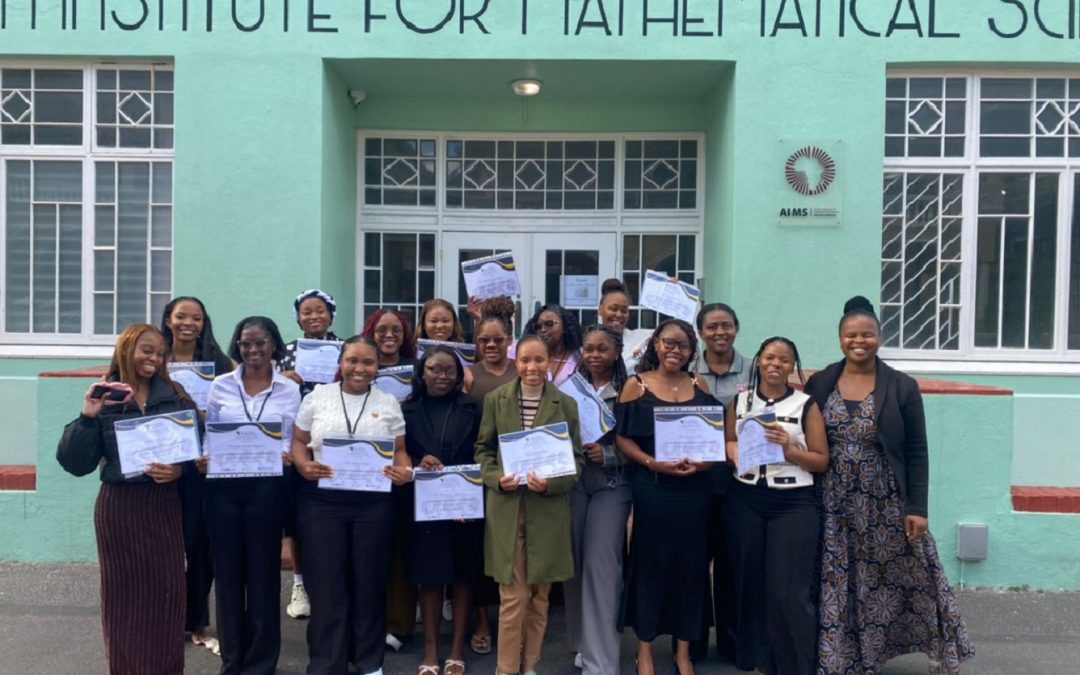
A cohort of sixteen female Mathematics and Applied Mathematics lecturers and postgraduate students from Sefako Makgatho Health Sciences University (SMU) recently participated in the WAFIRA-SA3 2025 Workshop, hosted by the African Institute for Mathematical Sciences (AIMS) in Muizenberg, Cape Town, from 30 October to 1 November 2025. The three-day programme, themed “Advancing Women in Mathematical Sciences,” brought together women from across Africa to strengthen leadership, research, and mentorship capacity within STEM disciplines.
 WAFIRA—short for Women’s Advancement Forum: International Exchanges, Research & Academia—is a continental initiative launched in 2014 by AIMS in partnership with African Gong. The programme equips women in science, technology, engineering, and mathematics with leadership tools and professional networks to help them thrive in academia and industry. Since its inception, WAFIRA has empowered more than 1,500 women across Africa through workshops and mentorship programmes. The name “Wafira”, derived from Arabic, signifies abundance—a fitting reflection of the initiative’s goal to cultivate an abundance of women leaders in STEM.
The SMU lecturers and postgraduate students joined other African academics for an intensive programme combining leadership training, personal development, and collaborative reflection. The opening day focused on empowering women for growth, exploring both intrinsic enablers—such as confidence, resilience, and lifelong learning—and extrinsic ones, including institutional support and inclusive environments. “Empowerment starts from within, but it flourishes in spaces that value women’s voices,” said Dr Rejoyce Gavhi-Molefe, one of the workshop facilitators.
The afternoon sessions centred on mentorship and work-life integration, underscoring the importance of balance and intentional engagement between mentors and mentees. Participants reflected on strategies for effective communication, professional boundaries, and mutual accountability. SMU participant and Junior Lecturer Kelebogile Medupe noted, “The session helped me see mentorship not just as guidance, but as a partnership built on trust and shared growth.”
Day Two placed emphasis on leadership and international collaboration, highlighting the transformative power of global partnerships in advancing research and visibility. Dr Elizabeth Rasekoala, Founder of WAFIRA, urged participants to lead boldly and intentionally: “Leadership is not bestowed—it’s cultivated through competence, confidence, and courage. Women must position themselves to access global opportunities that match their ambitions.”
A lively panel discussion followed, featuring voices from academia, research, and industry. Panellist Dr Juliet Nagawa, a WAFIRA alumna, shared, “Mentorship changed the trajectory of my career. It opened doors I didn’t even know existed.” The discussion underscored that institutions must formalise mentorship frameworks to ensure sustainability and equitable access to leadership pathways.
The final day of the workshop encouraged participants to design career progression roadmaps and reflect on their leadership journeys. Guided by facilitators, they crafted personal strategies for self-management and long-term success. “I leave this workshop with clarity, confidence, and a community of women who inspire me to dream bigger,” said Sindiswa Mnguni, participant and Junior Lecturer at SMU.
The workshop concluded with a certificate ceremony, celebrating each woman’s growth and commitment to leadership. In her closing remarks, Dr Rasekoala reminded participants that “the WAFIRA network is more than a programme—it’s a movement. We are building a legacy of abundance, where women in STEM lead, innovate, and transform Africa.”
The sixteen SMU lecturers and postgraduate students returned home inspired to champion mentorship, gender equity, and innovation within their departments—embodying WAFIRA’s vision of empowering African women to lead with purpose, resilience, and impact.
By Tumelo Moila
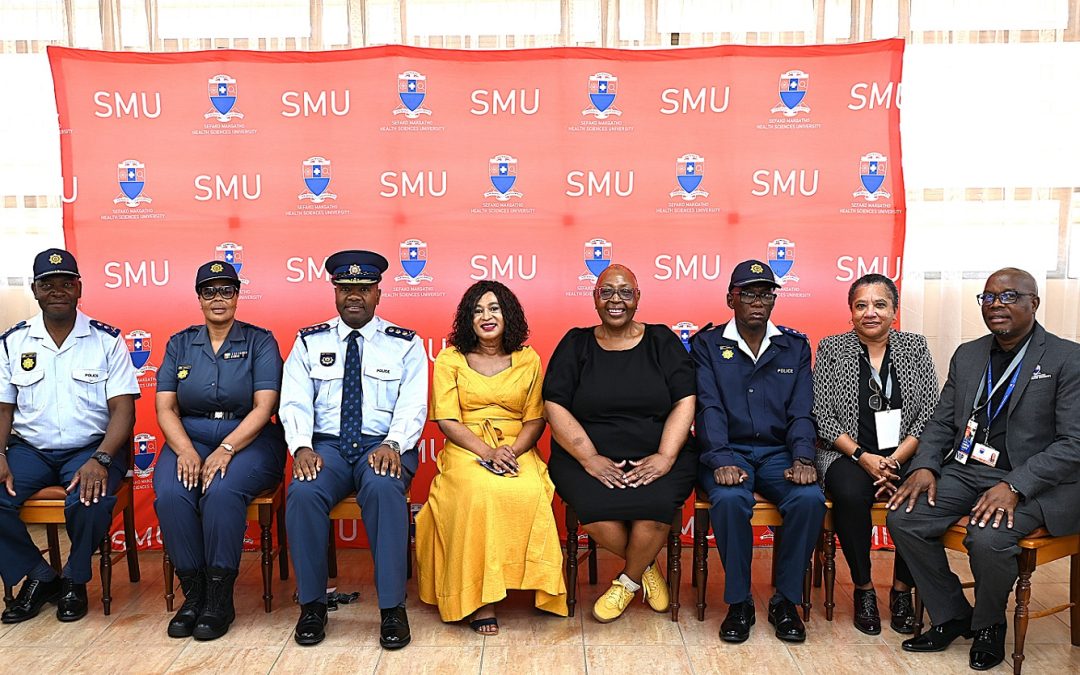
by Lorato | Oct 2, 2025 | Accolades and Achievements, All News, Alumni, SMU Media, Student Media
Sefako Makgatho Health Sciences University (SMU) has taken a decisive step in tackling campus insecurity and gender-based violence (GBV) with the launch of the Campus Community Safety Forum (CCSF). The two-day Safety Engagement, held on 1–2 October 2025 in partnership with the South African Police Service (SAPS), the Department of Higher Education and Training (DHET), civil society organisations and health providers, sent a clear message: safety and dignity on campus are non-negotiable.
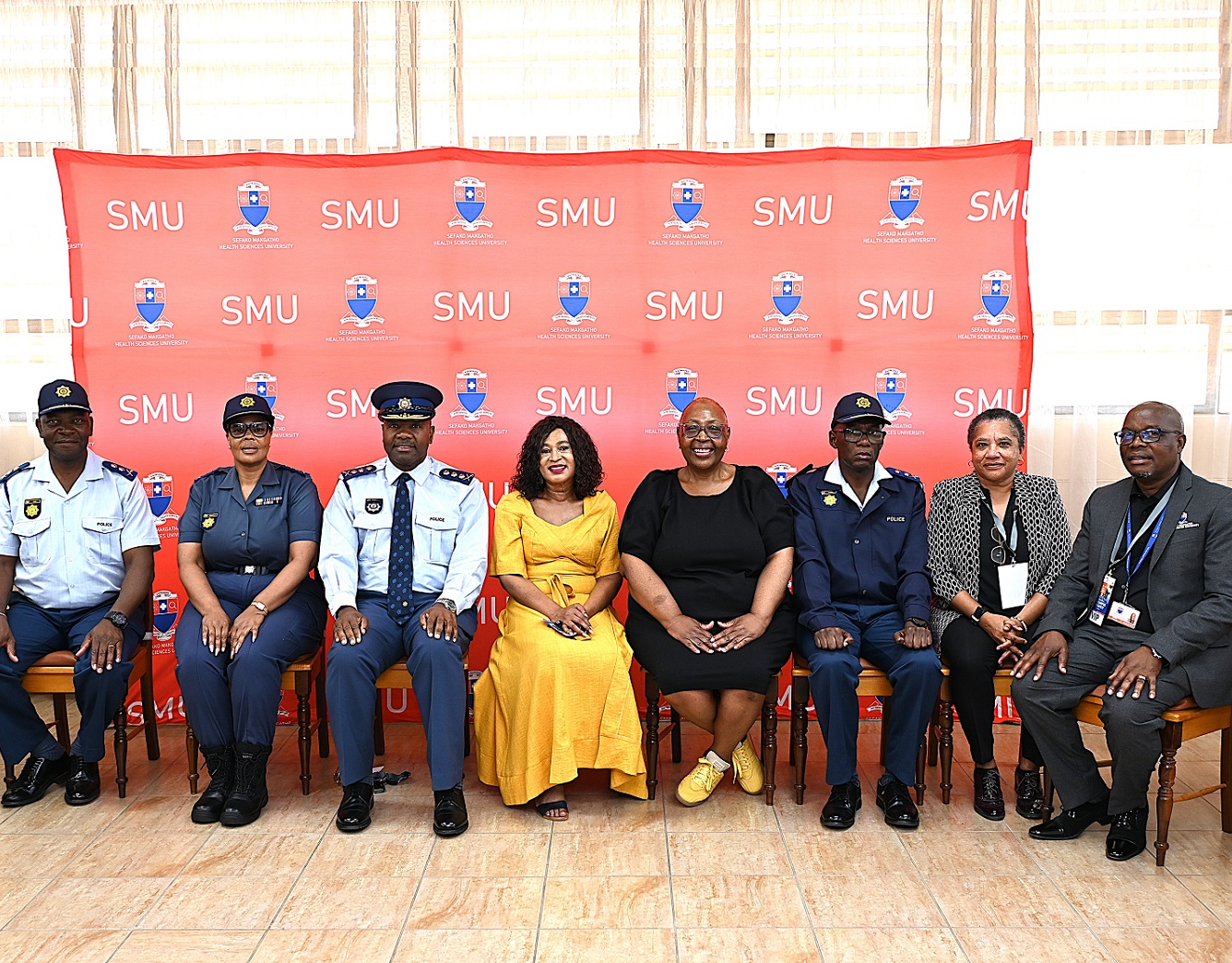 The programme was both urgent and collaborative. Day One centred on campus safety discussions, while Day Two marked the official establishment of the CCSF. Senior SAPS officials, university leadership, government representatives and students joined forces to strengthen coordinated action against GBV and crime.
Key highlights included:
- A framework for campus safety and security
- Focus sessions on GBV, law and justice
- Survivor-centred dialogues on support and safe reporting
- Direct engagements with SAPS and DHET
- Drafting of the CCSF’s terms of reference
The CCSF was conceived not as a symbolic structure, but as a practical platform to identify risks, address security concerns and build confidence in campus protection systems – with students placed firmly at the centre of decision-making.
Day Two began with opening remarks from SMU’s Acting Deputy Vice-Chancellor for Operations, Odette Ramsingh: “Our academic project is key to the vision and mission of SMU. We remain resolute in our drive towards academic excellence and leading healthcare solutions that will benefit our families, communities and South Africa. Therefore, safety is a core enabler of teaching, research and student success. We cannot pursue excellence in a culture of harassment, fear and intimidation, and most especially not in violence.”
 This was followed by an address from Vice-Chancellor, Professor Tandi Matsha-Erasmus, who stated: “This gathering is not ceremonial; it is a declaration. A declaration that SMU will remain unwavering in its resolve to create a campus where safety is not a privilege, but a promise. Let this forum not end with speeches, but with sustained action. Every theft prevented, every assault reported, every survivor supported is a victory for the values we hold dear.”
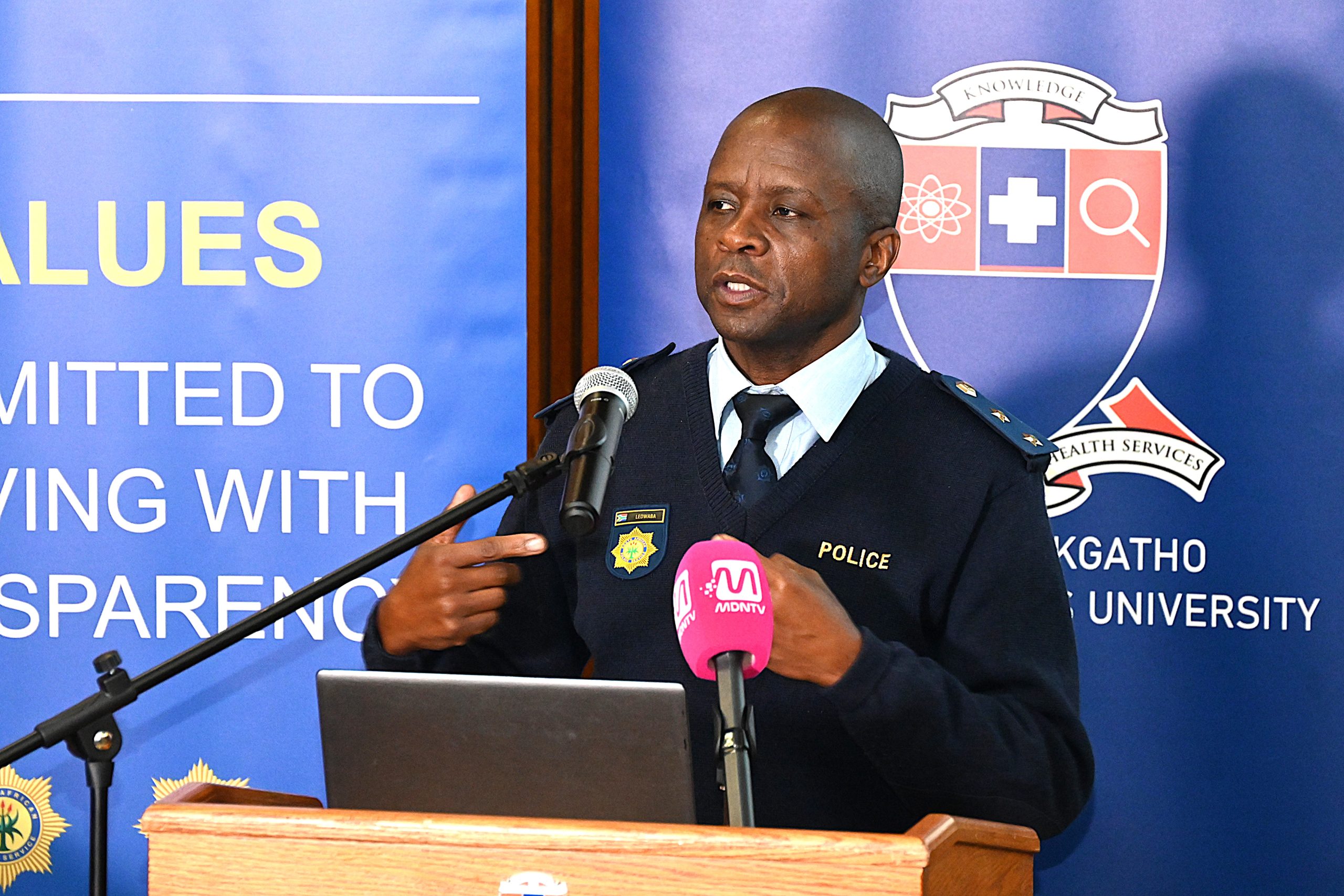
Messages of support from DHET, the Community Policing Forum, the Student Representatives and youth crime prevention structures reinforced a united front against GBV. The defining moment came when SAPS leaders joined SMU officials in signing the CCSF pledge, formally affirming their collective commitment. Gauteng Provincial Commissioner of Police, Lieutenant General Tommy Mthombeni, underscored the role of community forums and technology in addressing campus crime, highlighting the use of surveillance systems and the Gauteng e-panic button app.
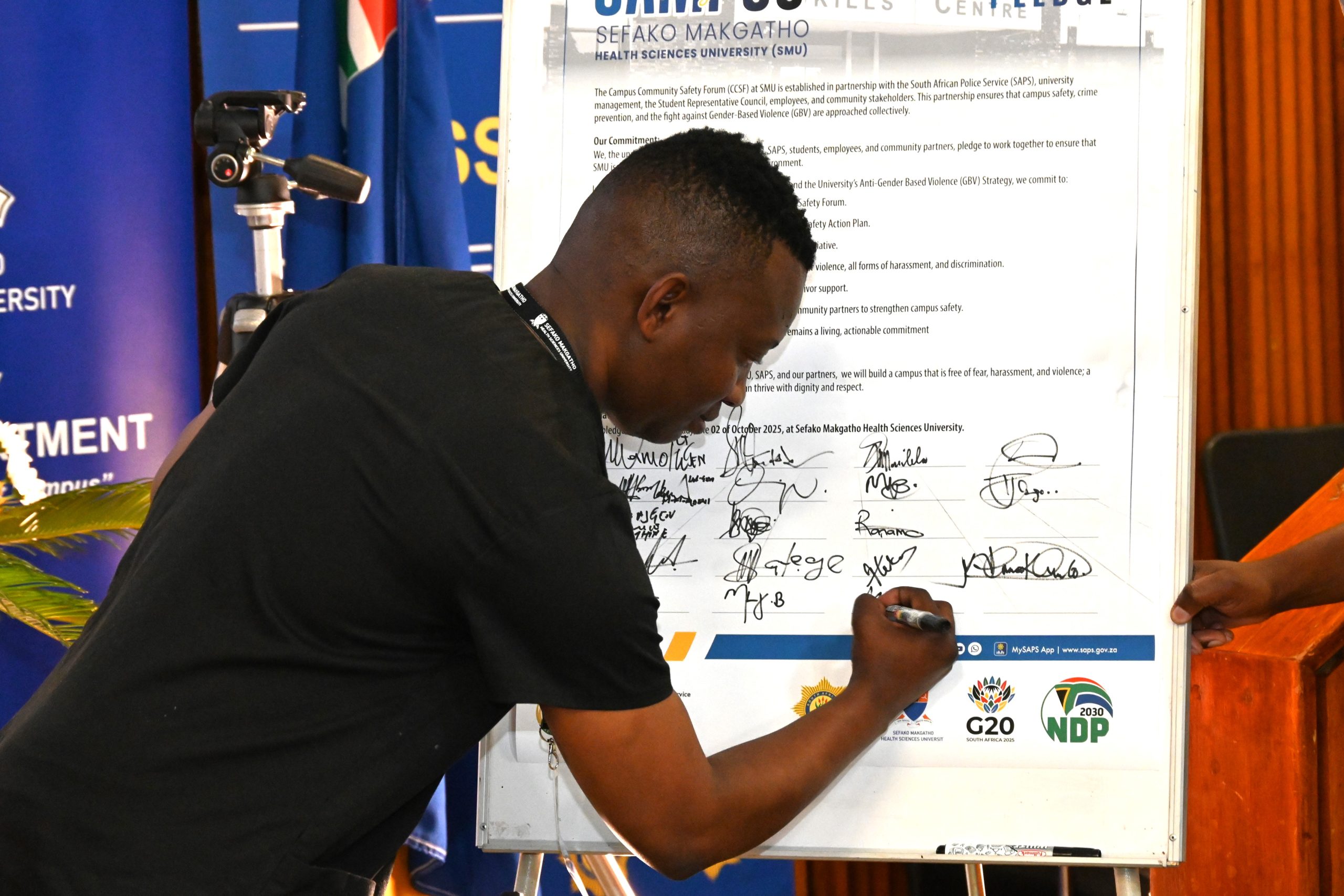 Student leadership also emphasised the urgency of the initiative. Outgoing SRC President, Katlego Moshanyane, reflected: “I am honoured to have participated in this launch, which prioritises student well-being and focuses sharply on eradicating GBV. This ensures SMU remains a safe environment for both students and staff.”
Organised labour endorsed the initiative with equal conviction. Dr Tshifhiwa Mulaudzi stated: “This vital initiative unites SAPS, staff and community leaders from Ga-Rankuwa to enhance campus security. Let us all participate fully to build a safer campus for everyone.”
At a time when South African universities face escalating security challenges, SMU has positioned itself as a leader in proactive, community-driven safety interventions. By combining law enforcement expertise, academic leadership, student voices and survivor support services, the CCSF is set to deliver lasting impact.
The campaign’s theme – “Safe Campus, Strong Voices – Together We Stop GBV” – captured the urgency and determination behind the initiative. Far from symbolic, the CCSF launch was a rallying call for sustained action, accountability, and a culture of safety built on shared responsibility.
By Tumelo Moila

by Lorato | Jul 2, 2025 | All News, SMU Media, Student Media
In a proud academic achievement, 24-year-old Reneilwe Saul has graduated summa cum laude with a Bachelor of Science (Honours) in Statistics, marking a significant milestone in her journey from Mafikeng to academic distinction at Sefako Makgatho Health Sciences University (SMU). Her outstanding performance not only reflects exceptional scholarly aptitude but also unwavering dedication, faith, and a deep passion for uncovering insights through data.
 “Earning summa cum laude is something I’m incredibly proud of,” Saul shared. “It represents not just academic excellence, but also the perseverance and passion I have for statistics. There were challenges along the way, from complex coursework to time management under pressure, but each hurdle strengthened my problem-solving and resilience. Most importantly, it affirmed my belief that when you’re truly invested in a field, the effort is always worth it.”
A former Mathematical Sciences student, Reneilwe’s transition into Honours Statistics allowed her to refine a strong foundation in statistical modelling, inference, and data analysis. She found particular fascination in Biostatistics and Nonparametric Statistical Inference, modules that gave her the opportunity to explore patterns and relationships within complex datasets.
Among her proudest academic accomplishments is her Honours research project, which examined an 11-year decline in journal productivity within a South African oral health publishing house. Employing categorical multivariate time series analysis, she uncovered extinction patterns in specialised fields such as paedodontics and restorative dentistry. The work was later published in the International Journal of Research in Business and Social Science (Vol. 13, Issue 6, 2024).
Her computing skills played a crucial role throughout her studies, particularly her proficiency in Python, Excel, and Google Sheets, with additional exposure to SQL and coding through CHPC Summer School training. She applied these tools in rigorous data analysis and visualisation, helping her interpret and communicate complex findings with clarity.
“Statistics has changed the way I think about the world. It has taught me to value evidence over intuition and to quantify uncertainty in decision-making,” she noted. “Being a statistician means being a decision enabler, someone who turns data into knowledge.”
 Saul’s ability to translate complex concepts into plain language became especially useful during her research presentations, where she used intuitive visuals and summaries to communicate results to non-technical audiences. Her project conclusions even offered strategic restructuring recommendations for academic publishers, proving the practical impact of her work.
Despite not currently being employed, Reneilwe remains hopeful and enthusiastic about her career prospects. “I’m actively job hunting and excited to apply my skills in sectors like health, education, or finance. I see myself thriving in a consultancy or private sector environment where continuous learning and mentorship are valued.”
She credits her faith and support system for her achievements. “I wouldn’t have done it without God, honestly. He is faithful and He’s God all by Himself,” she expressed with gratitude. “I’m also deeply thankful to the Head of Statistical Science Department, Professor Solly Seeletse, who guided me through the research process with such wisdom and patience. I always joke with him about how many years he has left before retirement, but truly, I hope he inspires many more students as he did me. And to Dr Sam Ntuli, thank you for the support, the ‘therapy sessions’, and for always reminding me to trust God.”
In the meantime, she continues to upskill through webinars, online courses, and staying current with advances in statistical methods and technologies. Her advice to aspiring statisticians? “Start early, ask questions, relate theory to real-world problems, and never give up.”
Reflecting on her journey, Saul says: “My journey as a statistics graduate has been a path of growth, discovery, and empowerment through data.” With her unwavering spirit, intellectual prowess, and faith-driven determination, Saul is poised to make a lasting mark in the world of data and beyond.
By Tumelo Moila
by Lorato | May 13, 2025
Pharmacy Latest Research Output: 2024 Home » Search Results for "enabler" ACCREDITED JOURNALS Teclegeorgish, ZW, Mokgalaka, NS, Kemboi, D, Krause, RWM, Siwe-Noundou, X, Nyemba, GR, Davison, C, de la Mare, JA & Tembu, VJ 2024, ‘Phytochemicals...